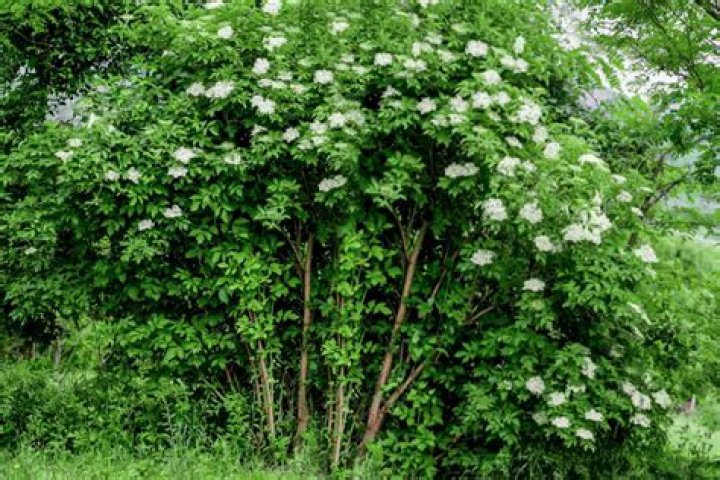
Smooth cordgrass has smooth, blade-like leaves that taper to a point. The leaves leaves grow 12 to 20 inches in length and one-half an inch wide. Tiny, white flowers bloom in July to September. It has round, hollow stems and a strong, interconnected root system.
Where does cordgrass grow?
Cordgrasses are found on marshes and tidal mud flats of North America, Europe, and Africa and often form dense colonies. Some species are planted as soil binders to prevent erosion, and a few are considered invasive species in areas outside their native range.
How do I get rid of cordgrass?
Hand-pulling and manual excavation. Manual removal methods are the simplest technology for removal of cordgrass. Manual removal includes pulling cordgrass plants out of marsh sediments or using hand-tools such as spades, mattocks, or similar tools to cut away as much cordgrass as possible within reach.
What does Spartina alterniflora look like?
The dominant grass in coastal plains of eastern North America, Saltmarsh Cordgrass grows 3 to 8 feet tall in moist, sandy coastal regions that are brackish to very salty. Its leaves are green with silvery white undersides.
How do you grow cordgrass smooth?
Place young plants 18-72 inches apart (45.5 to 183 cm.). The best water depths for establishing plants are up to 18 inches deep (45.5 cm.). Deeper plantings usually result in new plants drowning. Areas that flood twice per day are ideal, as they represent the conditions the plant experiences in nature.
What does cordgrass need to survive?
Although it relies primarily on groundwater absorbed through the roots, smooth cordgrass is able to extract fresh water from salt water when the need arises. Salt marshes serve as pollution filters and as buffers against flooding and shoreline erosion.
Are cordgrass true marine species?
California cordgrass is also called Pacific cordgrass. It is a California native, a perennial, and a coastal saltmarsh facultative halophyte, that is, it tolerates salt but salt is not a requirement for its growth.
What division is cordgrass?
SuperdivisionEmbryophytaDivisionTracheophyta – vascular plants, tracheophytesSubdivisionSpermatophytina – spermatophytes, seed plants, phanérogamesClassMagnoliopsidaSuperorderLilianae – monocots, monocotyledons, monocotylédones
What adaptations does cordgrass have?
California cord grass is adapted to the difficult habitat just below the high tide line, below other saltmarsh plants. In this zone, its roots are often submerged and the soil that anchors them is often low in oxygen. The leaves of California cord grass have a system of elongated, hollow cells.
What does smooth cordgrass look like?
Smooth cordgrass has smooth, blade-like leaves that taper to a point. The leaves leaves grow 12 to 20 inches in length and one-half an inch wide. Tiny, white flowers bloom in July to September. … Smooth cordgrass grows in two forms: a short form that grows to 2 feet tall, and a tall form that can reach 7 feet tall.
Article first time published on
Why is cordgrass found only in the low marsh?
It can grow in low marsh (frequently inundated by the tide) as well as high marsh (less frequently inundated), but it is usually restricted to low marsh because it is outcompeted by salt meadow cordgrass in the high marsh.
What do smooth cordgrass eat?
It takes about a year for the grass to be broken down into pieces of detritus small enough to be eaten by other animals. Clams, oysters, mussels, snails, crabs, and many other animals feed on this detritus. Spartina grass also provides habitat for many animals.
How fast does cord grass grow?
It is not uncommon for smooth cordgrass to produce 8′ to 10′ of lateral spread in one growing season. Depending on site conditions and the planting objective, two rows of smooth cordgrass are occasionally planted. A two-row planting will provide quicker and denser short-term coverage than a single-row planting.
Why is smooth cordgrass important?
Smooth cordgrass is an important component of Gulf Coast salt marshes which stabilize shorelines against erosion and filter heavy metals and toxic materials from the water column [13]. The presence of smooth cordgrass indicates sites with high salinity, which can be managed for shrimp ponds [20].
Where is switchgrass native to?
Panicum virgatum, commonly known as switchgrass, is a perennial warm season bunchgrass native to North America, where it occurs naturally from 55°N latitude in Canada southwards into the United States and Mexico.
Are Cordgrass true members of the grass family?
Spartina, commonly known as cordgrass or cord-grass, is a genus of plants in the grass family, frequently found in coastal salt marshes. … They form large, often dense colonies, particularly on coastal salt marshes, and grow quickly.
Is marsh grass invasive?
According to new research from North Carolina State University, the invasive marsh grass’s effects on carbon storage, erosion prevention and plant diversity in protected wetlands are neutral. … Phragmites australis, known as the common reed, is an invasive marsh grass that can spread at rates up to 15 feet per year.
Are marsh grasses true plants?
Sea grasses are true flowering plants with leaves, stems, roots and flowers. They are vascular plants, meaning they contain vessels that conduct fluids up and down the plant. Flowering plants are not abundant in the ocean. Marine grasses and mangrove trees are among the few vascular plants that grow in salt water.
Who eats cordgrass?
Waterfowl, shorebirds, and songbirds eat the seeds, geese and muskrats each the rhizomes, and deer eat the entire plant. Large patches of S. alterniflora can also provide food, nesting sites, and shelter for many other animals, both above and below the soil, such as fiddler crabs and ribbed mussels.
Is smooth cordgrass an invasive species?
Smooth cordgrass is a perennial grass that is native to the Atlantic and Gulf Coasts of North America but is invasive along the Pacific Coast. Hollow stems grow from 2 to 4 ft (0.6 to 1.2 m) tall. Leaves are 8 to 20 in. … It can hybridize with other spartina species.
What eats salt marsh grass?
Their predators include blue crabs, terrapins, fish, raccoons, and marsh birds. Marsh Periwinkle (Littorina irrorata)- The marsh periwinkle snails grow to be 1 ¼ inches long. They live in salt marshes on blades of cordgrass. They eat algae, including diatoms that are deposited on the grass by the tidal water.
How does Cordgrass adapt to estuaries?
During maturity, the grass will stand tall and have a single budding flower at its tip. It can withstand salty environments, making it an ideal plant in estuaries, as the salt water distributes salt particles around the marshland and the shore land.
Which species of cordgrass is native to California?
Sporobolus foliosus is a species of grass known by the common name California cordgrass. It was reclassified from Spartina foliosa after a taxonomic revision in 2014. It is native to the salt marshes and mudflats of coastal California and Baja California, especially San Francisco Bay.
How does Atlantic cordgrass spread?
The Western Aquatic Plant Management Society (2004) reports that, \”Spartina alterniflora can spread by seed, rhizome, or vegetative fragmentation (Daehler and Strong 1994). However, the plant does not produce seed in several areas where it has been introduced.
Why is Atlantic cordgrass a threat?
Even more distressing, the East Coast cordgrass has mixed with native species and spawned hybrids that grow faster and stronger than their parents. If left alone, the invader could destroy thousands of acres of bird and wildlife habitat, extinguish native plant species and clog tidal creeks and flood control channels.
How tall is marsh grass?
Its common name refers to its grayish-green, saw-toothed leaves that emerge from its base. Its stems can grow 7 to 9 feet tall, depending on the depth of the water in which it grows.
What are Halophytic plants?
Halophytes are plants which naturally survive in salt-contaminated environments and can tolerate salinity concentrations as high as 1 M NaCl (Flowers and Colmer, 2008; Kumari et al., 2015). About 1% of the total flora of the world (both dicots and monocots) are halophytic plants.
What kind of plants are in a salt marsh?
The majority of the area’s plants are grasses, sedges, rushes and succulent plants such as saltwort and glasswort. This marsh habitat is an open system dominated by these lower plants – there are, in fact, rarely any trees found within the salt marsh.
How does Glasswort survive?
While Glasswort does not directly grow in the marsh, it receives a fair amount of salt spray as it lives close by. As halophytes, they are able to accumulate and store salt within their leaves and stems which allows them to survive in this type of habitat.
Are Cordgrasses found in tropical or temperate regions?
Salt marshes are found in sheltered intertidal areas, especially in the temperate regions of the world. (In the tropics similar environments usually support mangroves.) Perennial grasses, the cordgrasses (Spartina spp.) in particular, dominate, but forbs and succulent subshrubs also occur.
What is Spike grass?
Spike grass is a short grass often found growing with salt hay grass in higher salt marsh zones. Before it flowers, spike grass is difficult to distinguish from salt hay grass. When in bloom, spike grass has a single, spindle-shaped flower head comprised of numerous individual flowers.